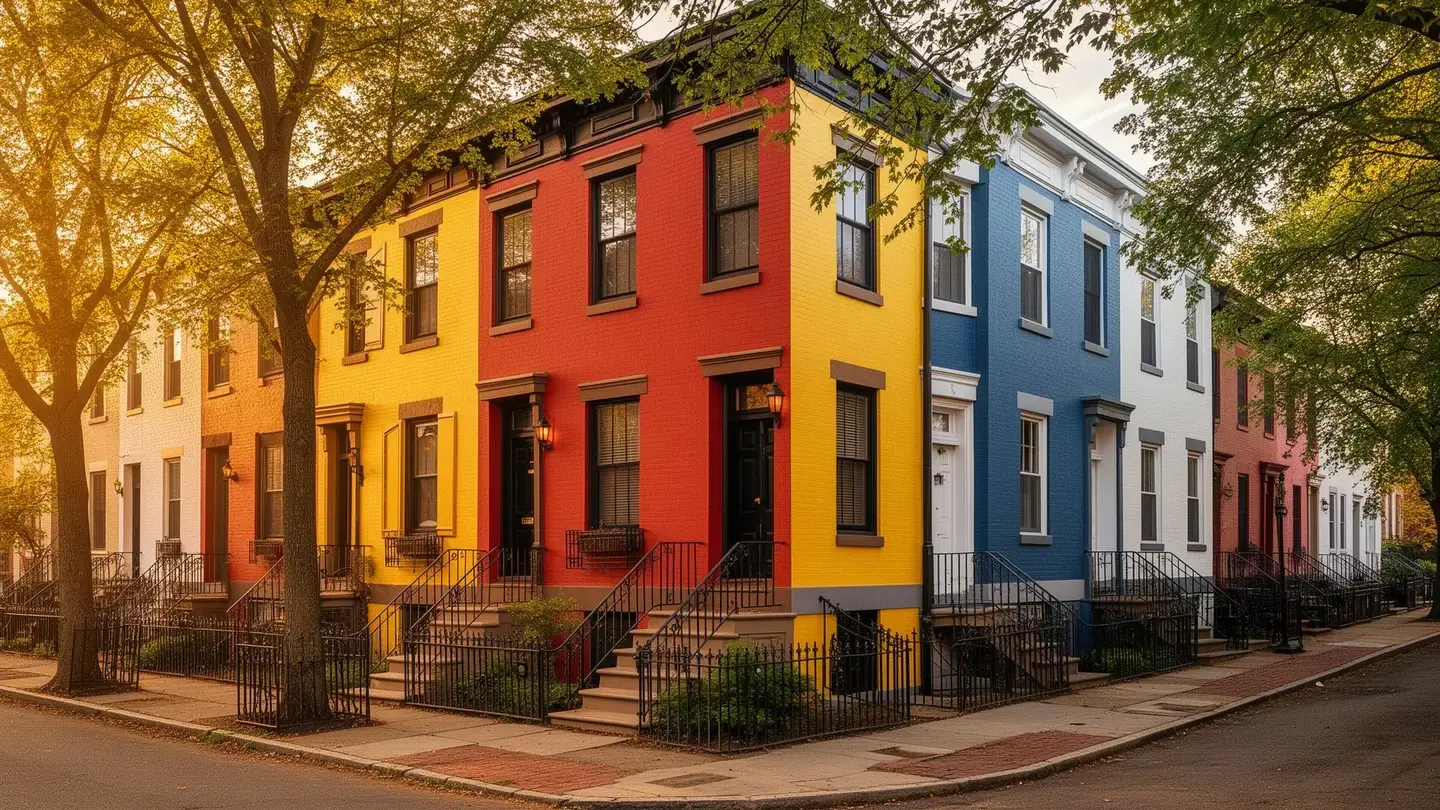
“RentReadyDC team handles entire DC rental license renewal from start to finish. Having a real person managing the process instead of navigating DCRA/DLCP paperwork saves a ton of time and stress. I’d recommend them to any DC landlord who wants compliance handled without the headache.”
RentReadyDC files your Washington, DC rental license end to end: Basic Business License (BBL), Certificate of Occupancy, Clean Hands, RAD registration, and the DLCP housing inspection — coordinated across all three DC agencies. Renting without a license is a Class 1 infraction — $2,549 for a first offense — and we make sure you never pay it.
How It Works — Filed, Inspected, Licensed
- Tell us about the property — The free 60-second check, or the start-my-filing form. We confirm your exact price before anything is charged.
- We file everything — BBL, Clean Hands and RAD registration, submitted within 1–2 business days. You never touch a government form.
- Pass the DLCP inspection — We schedule it and send the prep checklist. If the inspector flags repairs, we tell you exactly what to fix — and if DLCP rejects a filing we prepared, we refile free.
- Your license is issued — Most licenses arrive in 30 to 60 days end to end, and our free renewal reminders keep it current.
Frequently asked questions
Do I need a license to rent my property in Washington, DC?
Yes. Every DC rental needs a Basic Business License (BBL) before you can legally collect rent. Renting without one is a Class 1 infraction — $2,549 for a first offense, and it escalates with each repeat — and until you are licensed, DC law bars you from filing for possession. RentReadyDC files the entire BBL for you.
I am already renting without a license. What happens if I come forward now?
There is real exposure — DC can assess fines for the unlicensed period, DC law bars you from filing for possession while you are unlicensed, and a tenant can raise it. We are not going to pretend otherwise. What we can tell you is that it is almost always cheaper to fix than to be found: we get the filing in, keep the record clean, and manage the exposure as part of the work. This is the most common call we get.
I live out of state. Who lets the DLCP inspector into my property?
You do — or whoever you nominate: a tenant, a neighbor, a property manager, or an agent with a key. RentReadyDC schedules the inspection, tells you the window, and gives you the prep checklist of the items inspectors fail most often, but someone local has to provide physical access on the day. We will work around their availability when booking the slot. Deployed or mid-PCS? Everything else — authorization, documents, signatures, payment — runs by email and e-signature from any time zone; the inspection is the only in-person moment, and it does not have to be yours.
What does the DC rental license process actually involve?
More than most owners expect: a Basic Business License, Clean Hands certification, RAD/Rent Registry registration, a Certificate of Occupancy, and a passing DC housing inspection — across three separate city agencies. We handle all of it, end to end.
My row house was built before 1978. What does that change?
Most DC row houses were, so this is routine rather than alarming. Pre-1978 rentals carry lead-based paint obligations under the DC Lead-Hazard Prevention and Elimination Act: your tenant gets a lead disclosure with the EPA pamphlet, and a RIP form filing applies in some cases — DC paperwork that runs $0 to $35 where it applies. Peeling paint in a pre-1978 building is one of the violations DC inspectors write up most often, and any renovation work triggers DC Lead-Safe requirements — lead-safe practices by a certified contractor. It does not change the $549: the lead requirements sit alongside the license rather than inside it, and the prep checklist we send flags paint condition before the inspector sees it. If your property turns out to need a certified lead inspection or a clearance report, that is specialist work outside the filing, and we tell you before you pay for anything.
Do you handle DC personal property tax (the FP-31)?
Yes. Registering a BBL opens a personal property tax account with DC's Office of Tax and Revenue, which expects an FP-31 return every July 31 — even though most small landlords owe $0, since the first $225,000 of property is exempt. Our compliance subscription includes that annual filing, done for you. Already holding a delinquency notice? We file the missing return and answer the notice for $199, or $149 with a subscription.
What if DC rejects my filing?
If DLCP rejects a filing we prepared, we correct it and refile at no additional charge. That is a guarantee, not a courtesy — the filing is our work, so a rejection is our problem. What we cannot promise is the outcome of the physical inspection: if the unit itself fails on condition, the repairs are the owner’s, though we tell you in advance what inspectors fail most often so it rarely comes to that.
How long does it take to get licensed?
A complete, well-prepared filing is usually licensed in 30 to 60 days. The variable is not our turnaround — it is the DLCP inspection queue, which runs roughly 2 to 5 weeks depending on the ward. What actually stretches a filing past 90 days is a missing Clean Hands, RAD registration, or Certificate of Occupancy, and closing those gaps before you file is the job.
How much does it cost?
$549 all-in for a one-unit rental, $749 for two units, $899 for three and $999 for four, then $100 per additional unit. DC's own license fee sits inside that price — $159 for a one-family over the full two-year term — so there is nothing further to pay the city on a standard filing. DC charges nothing for Clean Hands, RAD registration or the first inspection — they're simply included in the work. Short-term rental (Airbnb-style) filings are also $549 — that is a different DC license with host-residency rules, and we file both. If you are comparing providers: Rent Jiffy advertises 'From $349' without saying what is inside it; our comparison pages show the like-for-like math. Optional add-ons are separate and priced up front — pre-inspection visit $129, inspection attendance $149, LLC formation $299, EIN $99, registered agent $129 a year — and most owners need none of them. Certificate of Occupancy corrections, permitting and unusual buildings are quoted separately, always before you commit.
What is "Clean Hands" and do I need it?
Clean Hands is a DC certification that you don't owe the city more than $100 in taxes or fines — and you can't get a rental license without it. We check your status and handle it as part of the process.
Do I have to pass a DC housing inspection?
Yes. Your unit must pass a DC housing inspection to be licensed. Failed inspections are the #1 cause of delays, so we prep your property to help you pass the first time.
Do you handle everything, or do I still deal with the agencies?
You don't touch a single government form. We file the paperwork, manage all three DC agencies — DLCP for the license and housing inspection, DOB for permits and Certificates of Occupancy, OTR for Clean Hands and taxes — and coordinate the whole thing, built for owners with one to four units and small portfolios.
What happens if I rent without a license?
Renting without a license is a Class 1 infraction — $2,549 for a first offense, and it escalates with each repeat. Until you are licensed and registered, DC law bars you from filing for possession, so you cannot evict. Getting licensed protects your income. We make it painless.
What happens if I fail a DC rental inspection?
If your property fails a DC rental inspection, you will receive a notice of violation listing the specific issues found. You are given a correction period — typically 10 to 30 days depending on the severity — to address the violations. After making corrections, you can schedule a re-inspection. Failing to correct issues within the given timeframe may result in fines, license suspension, or legal action.
How long do I have to correct DC housing violations?
The correction period depends on the type and severity of the violation. Minor issues such as missing smoke detectors or chipped paint typically allow 10 to 14 days. More significant structural or safety violations may require 30 days or more. The notice you receive from DLCP will specify your exact deadline.
What is required for a DC Basic Business License (BBL)?
To obtain a BBL for a rental property in Washington, DC, you need a Clean Hands Certificate, proof of property ownership, a completed application through the DC Department of Licensing and Consumer Protection (DLCP), applicable fees — and a Certificate of Occupancy where your building type requires one (many one-family homes are exempt). Every DC rental also touches RAD: rent-controlled properties register, exempt ones file a Claim of Exemption, and we file whichever yours needs.
Do I need an inspection for BBL renewal?
DC may require a housing inspection as part of the BBL renewal process — properties are subject to periodic inspections to ensure ongoing compliance with the DC Housing Code. It is best to prepare your property before the renewal window opens to avoid delays.
What are the most common DC inspection failures?
The most common reasons properties fail DC rental inspections include missing or non-functioning smoke and carbon monoxide detectors, water damage or leaks, electrical hazards, lack of hot water, broken windows or doors, pest infestations, and missing handrails on stairs. Addressing these items before inspection significantly increases your chances of passing.
How long does a DC rental inspection take?
A standard DC rental inspection typically takes between 30 minutes and one hour, depending on the size and condition of the property. Multi-unit properties may take longer. Inspectors check plumbing, electrical, structural integrity, fire safety, and overall habitability.
Can I rent my property before inspection?
You must have a valid BBL — and a Certificate of Occupancy where your building type requires one; many one-family homes are exempt — before legally renting your property in Washington, DC. Renting without proper licensing is a Class 1 infraction — $2,549 for a first offense, and it escalates with each repeat — and until you are licensed, DC law bars you from filing for possession. We recommend completing all inspections and obtaining your license before listing your property.
What documentation do inspectors require?
During a DC rental inspection, you should have your Certificate of Occupancy (where your building type requires one — many one-family homes are exempt), current BBL or application receipt, proof of ownership, tenant lease agreements (if applicable), maintenance records, and any prior inspection reports. Having organized documentation demonstrates compliance and can streamline the process.
See what your DC rental license requires — free 60-second check · Done-for-you DC rental licensing
Questions? Call (202) 883-8275, Mon–Fri 9–6 ET · support@rentreadydc.com